
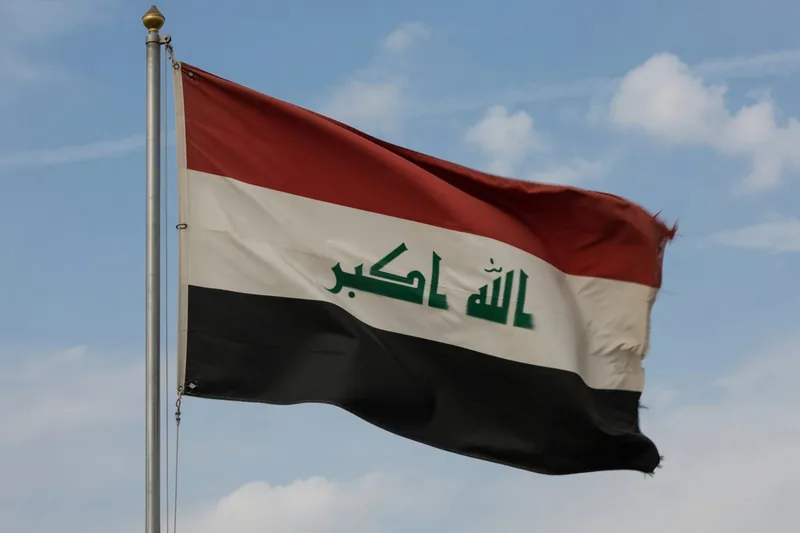
What does revaluation mean?
Revaluation describes an upward adjustment in the official value of a currency under a fixed or managed exchange-rate arrangement. It is a policy decision by the authority that manages the currency — for the dinar, the Central Bank of Iraq — and it is announced publicly, with an effective date.
It is a policy term, not a promise of a future gain. A revaluation changes the rate at which the central bank deals; it does not, by itself, guarantee what a bank or exchange office will pay you.
A real example: February 2023
Iraq has revalued before, and the record is easy to check. On 7 February 2023 the CBI announced (opens in a new tab) that from the next day it would sell dollars at 1,300, 1,310 and 1,320 dinars per dollar depending on the transaction, replacing the 1,450 rate introduced in December 2020. Fewer dinars per dollar means each dinar is worth more — that is what a revaluation looks like.
Notice the scale: the official value moved by roughly a tenth, through a dated public announcement. That is a useful benchmark when a claim promises a very large move on an unannounced date.
The opposite move: October 2026
Official rates move in both directions. In October 2026 Iraq’s Council of Ministers approved new rates of 1,500, 1,510 and 1,520 dinars per dollar (Decision No. 544, reported by Rudaw on 7 October 2026 (opens in a new tab)), replacing 1,320 for final beneficiaries. More dinars per dollar means each dinar buys less: a devaluation, not a revaluation.
You can see the step in the daily rate history around 7–9 October 2026. Predictions of a large revaluation had circulated for years; the documented official change was in the other direction.
Dinar guru predictions: dates, rates and evidence
Many “dinar guru predictions” name a date or a target rate. A date or target rate in a discussion remains a claim until it can be checked against an authentic official publication. Repetition across videos, blogs and recaps does not add evidence — it usually means the same claim has been copied.
When a predicted date passes without an announcement, that is information too. Keep a note of what was predicted and when, so you can judge a source’s record over time.
What should you verify?
- The issuing authority: is the statement from the Central Bank of Iraq or the Iraqi government, or someone describing them?
- The publication date and the effective date of any new rate.
- The original document, in its original language where possible — not a screenshot or a summary.
- The rate’s units (dinars per dollar) and the transactions it covers.
What about redenomination?
Redenomination changes the units used to express money — for example, “removing zeros” so that 1,000 old dinars become 1 new dinar. Prices, wages and balances are converted at the same ratio.
Removing zeros is not, by itself, evidence of a proportional increase in purchasing power. A claim that a redenomination will make existing notes worth hundreds of times more confuses two different things.
Where to read next
Use the exchange-rate guide for units and calculations, the claim-checking guide before sharing a prediction, and the source directory for primary publications.